
Material updated: 05.06.26
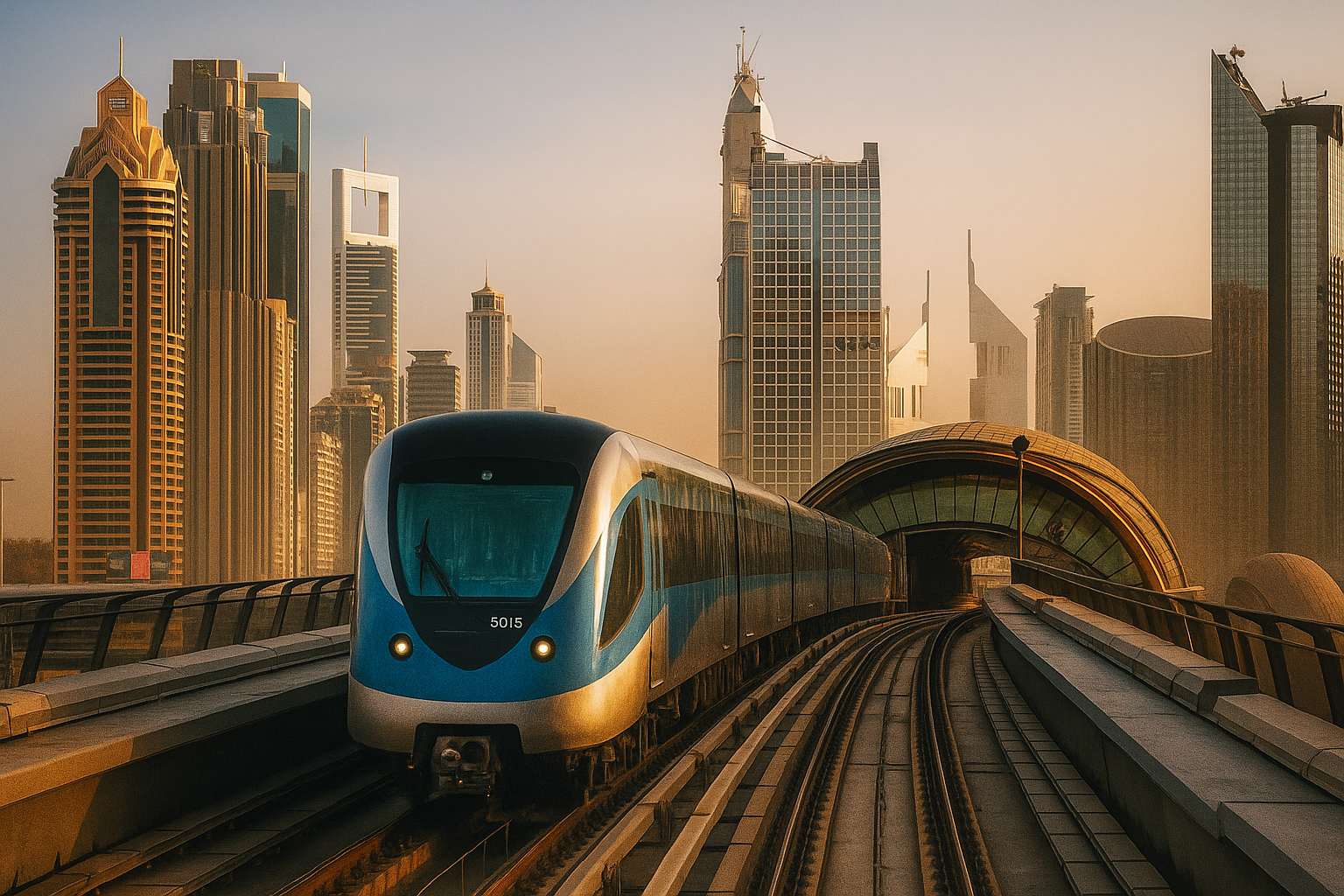
Dubai's metro system has fundamentally transformed urban mobility across the emirate, creating new patterns of demand and investment opportunities in the property market. With over 50 stations spanning the Red and Green lines, the Dubai Metro has become a crucial piece of infrastructure that influences where residents choose to live and work. For property investors, proximity to metro stations presents both compelling advantages and potential challenges that require careful consideration.

Accessibility & commute times: metro lines coverage
Dubai's metro network strategically connects major residential and commercial areas, significantly reducing commute times for residents. The Red Line stretches from Rashidiya to UAE Exchange, covering approximately 52 kilometers and serving key areas including Dubai International Airport, Business Bay, Dubai Marina, and Jumeirah Lakes Towers. The Green Line runs from Etisalat to Creek, connecting Deira, Bur Dubai, and other established neighborhoods.
Key accessibility benefits include:
-
Direct connections to Dubai International Airport via the Red Line.
-
Seamless access to major business districts including DIFC, Business Bay, and Downtown Dubai.
-
Integration with other transportation modes including buses and taxis.
-
Extended operating hours from 5:00 AM to midnight on weekdays.
-
Climate-controlled environment providing comfort year-round.
Price premium near stations: comparing metro-adjacent premiums
Properties located near Dubai Metro stations consistently command premium prices compared to similar properties in non-metro areas. Market analysis reveals that apartments within 300 meters of metro stations typically trade at 10-15% higher prices than comparable units located 1-2 kilometers away.
The premium varies significantly based on several factors:
Location-specific premiums:
-
Business Bay metro vicinity — 12-18% premium over non-metro areas.
-
Dubai Marina stations — 8-12% premium due to existing high property values.
-
Silicon Oasis metro area — 15-20% premium in this emerging district.
-
Downtown Dubai stations — 5-10% premium as the area was already premium-priced.
-
Deira and Bur Dubai stations — 10-15% premium for older, established neighborhoods.
Premium determinants:
-
Distance from station entrance (closer properties command higher premiums).
-
Quality of pedestrian infrastructure and walkability.
-
Availability of parking facilities at metro stations.
-
Integration with other amenities like shopping centers and restaurants.
-
Noise levels and visual impact of metro infrastructure.
Rental demand & tenant profile: who rents near metro
The tenant profile for metro-adjacent properties reveals distinct characteristics that drive consistent rental demand. Young professionals, particularly those aged 25-35, represent the largest segment of metro-area renters, valuing convenience and cost-effectiveness over space.
Primary tenant demographics:
-
Young professionals working in DIFC, Business Bay, and Downtown Dubai.
-
Airport employees and airline crew members seeking easy airport access.
-
International expatriates unfamiliar with Dubai's road network.
-
Families looking to reduce household transportation costs.
-
Students and young couples prioritizing lifestyle convenience.
Rental demand drivers:
-
Significant savings on transportation costs (up to AED 800-1,200 monthly).
-
Reduced need for car ownership and associated expenses.
-
Flexibility for residents without UAE driving licenses.
-
Access to Dubai's nightlife and entertainment districts.
-
Environmental considerations and sustainability preferences.
Top metro-corridor areas: Business Bay, Dubai Marina, Silicon Oasis
Three metro corridor areas stand out as particularly attractive for property investment, each offering unique advantages and market dynamics.
Business Bay represents Dubai's fastest-growing business district, with multiple metro stations providing excellent connectivity. The area has seen massive development over the past decade, with new residential towers regularly launching. Properties here attract both business professionals and investors seeking capital appreciation potential in the UAE real estate market.
Dubai Marina offers a mature market with established infrastructure and lifestyle amenities. The Marina and JLT metro stations provide excellent access to this waterfront community, supporting both residential and commercial real estate demand.
Silicon Oasis represents an emerging technology hub with significant growth potential. The area combines residential, commercial, and educational facilities, creating a self-contained community with strong fundamentals. Many investors are now considering off-plan developments in this area due to attractive pricing and future growth prospects.

Case studies: sample properties near key stations
Case study 1: Business Bay — one-bedroom apartment
A 650-square-foot one-bedroom apartment located 200 meters from Business Bay Metro Station was purchased for AED 1.2 million in 2022. The property generates AED 85,000 annual rental income, providing a 7.1% yield. Comparable properties 1 kilometer from metro stations trade at AED 1.05 million, demonstrating the metro premium effect.
Case study 2: Dubai Marina — two-bedroom unit
A 1,100-square-foot two-bedroom apartment near Dubai Marina Metro Station commanded AED 120,000 annual rent, compared to AED 108,000 for similar non-metro properties. The 11% rental premium justified the higher purchase price and provided superior returns for the investor.
Case study 3: Silicon Oasis — studio investment
A 450-square-foot studio purchased for AED 480,000 near Silicon Oasis Metro Station achieved 95% occupancy over two years, generating consistent rental income of AED 35,000 annually. The 7.3% yield exceeded expectations and demonstrated the emerging area's potential.
Risks & considerations: noise, cost premium, over-supply
Noise pollution represents a significant concern for properties in immediate proximity to metro lines. Ground-level and elevated sections can generate noise levels of 65-70 decibels during train operations, potentially affecting property values and tenant satisfaction. Properties on higher floors or with noise-reduction features command premiums within metro areas.
Cost premium challenges include higher initial investment requirements and potentially longer payback periods. The 10-15% premium for metro-adjacent properties may not always justify the additional cost, particularly in markets experiencing slower growth or oversupply conditions.
Over-supply risks are particularly acute in popular metro corridors where developers have concentrated new projects. Areas like Business Bay and JLT have experienced periodic oversupply conditions, pressuring rental rates and capital values despite metro connectivity.
Additional considerations:
-
Construction and maintenance disruptions during metro system expansion.
-
Potential changes in metro routes or service levels affecting property values.
-
Competition from ride-sharing services and autonomous vehicles.
-
Market saturation in premium metro locations.
Investment calculations: yield vs capital appreciation
Rental yield calculations for metro-adjacent properties typically show 0.5-1.5% higher returns compared to non-metro locations. A property generating 7% annual yield near a metro station might achieve only 5.5-6% in a non-metro area, though this varies by location and property type.
Capital appreciation potential near metro stations has historically outperformed broader market averages by 2-3% annually. However, this premium has moderated in recent years as metro effects have become fully priced into property values.
ROI analysis considerations:
-
Higher purchase prices require larger initial capital.
-
Potential for stronger rental income growth over time.
-
Reduced marketing and vacancy costs due to higher demand.
-
Enhanced liquidity when selling metro-adjacent properties.
Sample investment calculation:
-
Property purchase price: AED 1.5 million (metro-adjacent).
-
Comparable non-metro price: AED 1.3 million.
-
Annual rental income: AED 105,000 vs AED 90,000.
-
Net yield: 7% vs 6.9%.
-
Expected annual appreciation: 4% vs 2%.
Is it worth investing?
Investing in properties near Dubai's metro lines can be a smart move for investors seeking stable rental income and long-term capital appreciation. The consistent demand from professionals, expatriates, and cost-conscious residents provides a solid foundation for metro-adjacent property investments.
The key success factors include selecting the right location within metro corridors, understanding specific tenant demographics, and carefully evaluating the cost premium against potential returns. Areas like Business Bay, Dubai Marina, and Silicon Oasis offer different risk-return profiles suitable for various investor preferences.
Smart investors will continue to find opportunities in Dubai's metro corridors, particularly as the city's population grows and transportation infrastructure expands. The combination of accessibility, rental demand, and capital appreciation potential makes metro-adjacent properties an attractive component of a diversified Dubai real estate portfolio.
